the twin sister of the shah of iran
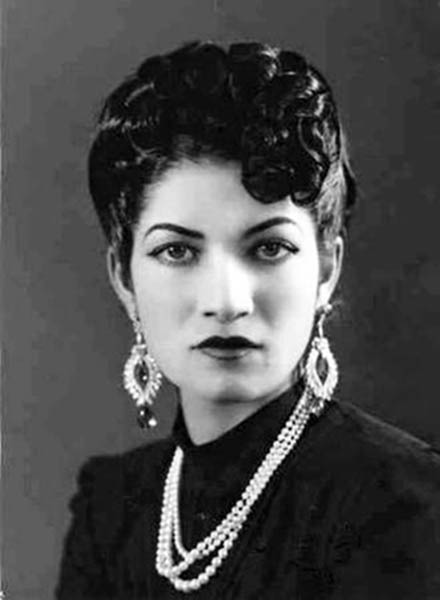
ASHRAF PAHLAVI
So many very important people who were Pierre Balmain's customers. It is hard for
Grandmaman to make a list especially when she is 98 years old! She talked about a few of them as I was trying to trigger her memories and adding
mine as well. She mentioned the Shah of Iran, before the Iran revolution, before the
Ayatollah Khomeini. The Shah was married to his first wife, the beautiful Soraya whom
he was forced to divorce because she could not have children and how heartbreaking it
was for both of them. Soraya was the love of his life. Soraya lived in exile in Paris. The
Shah took Farah Diba as a second wife, a student from Iran living in Paris who had
attended the Sorbonne University and who gave him four children among them two sons
he needed to succeed him. But history turned out completely different from what he
expected.
A bit of history here: Mohammad Reza Pahlavi ended up being the last Shah of Iran
before being overthrown by the Iranian Revolution in 1979. He had reigned over his
people with an iron fist. He repressed dissent and restricted political freedom while
pushing his country to adopt Western secular modernization allowing some degree of
cultural freedom. Right after the Iranian Revolution, he and his family ended going to
exile in Egypt. The interesting part is that the Ayatollah Khomeni lived in Nauphle le
Chateau while in exile before taking over his country from the Shah.
The village of Nauphle le Chateau is only a few miles from Grandmaman's home. Every time we drove to
Grosrouvre my Mom would say to us pointing to the place: This is where Khomeini lived
while in exile and before returning to Iran as the leader of his country.
Mom talked about the Shah's twin sister Princess Ashraf who was mean as well as a
cheapskate. That lady was one of my Mom's least favorite customers. However, Princess Ashraf
was the power behind her brother. Princess Ashraf and her brother, the Shah, were close
friends as twins often are and he would listened to her in her role of Palace advisor. In
fact, she was instrumental in the 1953 coup which led to him taking the throne. After the
Iranian Revolution that propelled the Ayatollah Khomeini to power, the Princess Ashraf
lived in exile in France, living the rest of her life in Paris and Monte Carlo where she
died.
The Princess Ashraf would often come to Pierre Balmain's boutique to buy evening
gowns. When my Mom was the Director of Pierre Balmain's boutique at the Hilton near
the Eiffel Tower, Princess Ashraf would stay at the Hilton while getting her new
apartment at Avenue Raphael remodeled, it was an apartment situated in the very chic
16th arrondissement. She would often stop by the boutique or send her escort and ask my
Mom if there were some fancy evening gowns on sale. One day she came to look around
and found some things she liked and asked my mom to deliver them to her room at the
Hilton. My mother knowing her well from previous interactions had the feeling that day
that the Princess had no intention to pay. So she went upstairs with the escort and
delivered the gowns herself. In those days whatever you bought had to be paid in cash when
delivered. The Princess upon learning how much it cost complained and refused to pay,
saying that it was overpriced and not the price she had been quoted earlier. She claimed
that Pierre Balmain was taking advantage of her and so on and so on.
My Mom protested saying it had never been the case in all the business dealings she had
had and that Pierre Balmain was totally honest and that the Princess could have total trust
in him and his business. Then my Mom remembered an invoice she had previously given
to the Princess's secretary with the exact price of the gown and so she asked the secretary
to promptly find it, which she duly did and showed the Princess the famous invoice that
had been ignored by his Majesty, proving that nobody was trying to cheat her. The
secretary paid cash in $100 bills. My Mom carefully counted the bills in front of the
Princess and found there was one $100 bill too much upon which she promptly gave
back that money to the Princess proving her honesty as an employee of Pierre Balmain!
Another story about the famous cheapskate Princess:
One day while still living at the Hilton, the Princess's daughter who was about 12 years
old asked my Mom if she could get her an autograph of Alain Delon, the very famous
French actor who every French woman dreamed about. I would compare him to Brad
Pitt or George Clooney. My Mom said to the Princess's daughter that she had not seen
him around and that she did not know where he lived. About a month later, as Mom was
waiting for the elevator to go deliver something to a customer, the door opens and here
comes out Alain Delon in all his charm! She was so shocked to see him that she
completely forgot to ask him for an autograph. She could have said: Princess Ashraf's
niece is in love with you and would like an autograph. At that very moment, she forgot
everything. I guess she was swept away by him too! I told my Mom: Hey, I would have
liked an autograph too! In fact my Mom had to work on the inventory somewhere in the
basement in a room especially given to the boutique and had to hurry. She did not want to
be gone too long and leave the boutique by itself.
A French journalist
gave
Princess Ashraf
the nickname of the Black Panther. She remained outspoken against the Islamic
Republic of Iran. She lived in exile in France from 1980 until her death in 2006 in Monte
Carlo. She had three failed marriages, suffered from depression and addictions and
survived the assassination of one of her sons.
So what happened to the Shah and the rest of his family? Long supported by the U.S., he
died of cancer in Cairo, Egypt. Members of his family have been living in exile in France
and in the US for decades. One of his sons Ali Reza , who was 12 at the time of the
revolution, attended primary school in Iran and was then educated in the US. He killed
himself at the age of 44 in Boston, after struggling with depression for years. His sister
Leila died of a drug overdose in London in 2001. Amid talk of recurrent tragedy, the
family issued a statement blaming Ali Reza Pahlavi's suicide on, ''what was unjustly inflicted on his
Iran his beloved country'', adding that "he never forgot the painful memory of his father
and beloved sister's deaths''.
Stephen Kinzer, an American expert on Iran, commented: ''This shocking act of
self-slaughter was the latest violent tragedy of a family drenched in blood - first of the
Iranians it tortured and killed, then its own.''
It is a drama of Shakespearean dimensions. The Shah once ruled Iran with an iron fist, but
his family later paid dearly for his sins, echoing Hamlet's judgment that royal crime
"cannot come to good".